
Healing Tuning Forks: What Are 128 Hz, 256 Hz & 512 Hz Tuning Forks Used For?
Discover how 128 Hz, 256 Hz and 512 Hz healing tuning forks differ, what weighted and non-weighted forks mean, how they are used in meditation and sound practice, and how they differ from medical tuning forks.

What to remember
- Hz, 256 Hz and 512 Hz tuning forks offer different balances of vibration and audible tone.
- Weighted tuning forks emphasize tactile vibration, while non-weighted forks produce a clearer audible sound.
- Medical diagnostic tuning forks and wellness tuning forks may share frequencies but are designed for different intended uses.
Table of contents
- A Simple Instrument with Surprisingly Different Uses
- What Is a Tuning Fork?
- Weighted vs Non-Weighted Tuning Forks
- Weighted Tuning Fork
- Non-Weighted Tuning Fork
- 128 Hz vs 256 Hz vs 512 Hz Tuning Forks
- What Is a 128 Hz Tuning Fork Used For?
- 128 Hz in medical examination
- 128 Hz in sound and wellness practice
- What Is a 256 Hz Tuning Fork Used For?
- What Is a 512 Hz Tuning Fork Used For?
- 512 Hz for hearing examination
- 512 Hz for mindful listening
- Where Does a 1024 Hz Tuning Fork Fit?
- How to Use a Tuning Fork for Sound or Meditation Practice
- Select a Frequency
- Hold the Handle
- Activate the Fork Gently
- Listen
- Store the Instrument Carefully
- What Does “Healing Tuning Fork” Actually Mean?
- Medical Diagnostic Tuning Fork vs Healing Tuning Fork
- Medical Diagnostic Tuning Fork
- Healing / Wellness Tuning Fork
- Explore the Complete IndoSurgicals Tuning Fork Range
- Tuning Fork 128 Hz
- Tuning Fork 256 Hz
- Tuning Fork 512 Hz
- Tuning Fork 1024 Hz
- Aluminium Tuning Fork Set of 5
- Tuning Fork Set of 3
- Tuning Fork Set of 4
- Healing Tuning Forks Set with Mallet
- How to Choose the Right Tuning Fork
- For neurological vibration-sense examination
- For Rinne and Weber hearing tests
- For medical students
- For meditation and personal sound practice
- Frequently Asked Questions About Tuning Forks
- What is a 128 Hz tuning fork used for?
- What is a 256 Hz tuning fork used for?
- What is a 512 Hz tuning fork used for?
- What is the difference between weighted and non-weighted tuning forks?
- Which tuning fork is best for hearing tests?
- Which tuning fork is used for vibration sense?
- Can tuning forks be used for meditation?
- Does a healing tuning fork cure disease?
- Should a medical student buy one tuning fork or a set?
- Final Thoughts
- Explore IndoSurgicals Tuning Forks
Healing Tuning Forks: What Are 128 Hz, 256 Hz & 512 Hz Tuning Forks Used For?
A practical guide to tuning fork frequencies, weighted and non-weighted designs, medical diagnostic applications, meditation and sound practice — plus a look at the complete IndoSurgicals tuning fork range.
A Simple Instrument with Surprisingly Different Uses
At first glance, a tuning fork seems almost too simple to deserve much explanation. It has no battery, no screen, no speaker and no electronic controls. Yet a precisely made tuning fork can produce a repeatable mechanical vibration and audible tone at a defined frequency.
That simple principle has made tuning forks useful in several very different fields. Doctors use medical tuning forks during selected neurological and hearing examinations. Medical students use them while learning clinical examination techniques. Outside the clinic, weighted and non-weighted tuning forks are also used in meditation, mindful listening and sound-based wellness routines.
This overlap explains why searches for terms such as 128 Hz tuning fork, 256 Hz tuning fork, 512 Hz tuning fork and healing tuning forks can produce very different products.
To choose the right tuning fork, it helps to understand three things: frequency, construction and intended use.
What Is a Tuning Fork?
A tuning fork is a U-shaped metal instrument with two parallel tines joined to a stem or handle. When activated, the tines move rapidly backwards and forwards. This movement creates mechanical vibration and causes the surrounding air to vibrate, producing an audible tone.
The number printed on the tuning fork indicates its nominal frequency in hertz (Hz). One hertz represents one vibration cycle per second.
Produces a relatively low-pitched tone and a readily noticeable mechanical vibration.
Provides an intermediate balance between tactile vibration and audible sound.
Produces a higher audible tone with less pronounced tactile vibration than lower-frequency forks.
Frequency therefore changes more than simply the musical pitch. It also changes the balance between what we hear and what we physically feel.
Weighted vs Non-Weighted Tuning Forks
Frequency is only one part of a tuning fork's design. Another important distinction is whether the instrument is weighted or non-weighted.
Weighted Tuning Fork
Weighted tuning forks have additional masses attached near the ends of their tines. This configuration makes the mechanical vibration particularly noticeable and is commonly seen in tuning forks intended for tactile or sound-practice applications.
Non-Weighted Tuning Fork
A conventional non-weighted tuning fork has open metal tines without additional masses. Its vibration tends to place relatively greater emphasis on the audible tone.
The IndoSurgicals Healing Tuning Forks Set combines both approaches: the 128 Hz and 256 Hz forks are weighted, while the 512 Hz fork is non-weighted.
128 Hz vs 256 Hz vs 512 Hz Tuning Forks
| Frequency | General Character | Wellness Set Design | Typical Areas of Use |
|---|---|---|---|
| 128 Hz | Strong low-frequency tactile vibration | Weighted | Vibration awareness, meditation and dedicated medical vibration-sense testing |
| 256 Hz | Intermediate vibration and audible tone | Weighted | Sound practice and selected clinical hearing, bone-conduction or sensory examinations |
| 512 Hz | Clearer audible tone with less tactile vibration | Non-weighted | Mindful listening and dedicated medical Rinne/Weber hearing examination |
What Is a 128 Hz Tuning Fork Used For?
A 128 Hz tuning fork produces a relatively low-frequency vibration that is easy to perceive physically. This makes 128 Hz especially interesting because the frequency appears in both medical examination and wellness-oriented tuning fork products.
128 Hz in medical examination
A purpose-designed medical 128 Hz tuning fork is particularly useful for assessment of vibration sensation during neurological and peripheral sensory examination.
When the base of an activated medical tuning fork is placed over an appropriate bony prominence, the patient can report whether the vibration is perceived. The result forms one part of a broader clinical sensory examination.
128 Hz in sound and wellness practice
In a weighted wellness tuning fork, 128 Hz provides a comparatively deep and noticeable mechanical vibration. Some users incorporate this vibration into meditation, mindful awareness and personal sound-practice routines.
The important distinction is that a wellness application should not be confused with a medical diagnostic claim.
What Is a 256 Hz Tuning Fork Used For?
The 256 Hz frequency sits between the lower 128 Hz fork and the clearer audible character of 512 Hz.
A weighted 256 Hz fork therefore provides an interesting balance of tactile vibration and audible tone during sound practice.
A separate medical IndoSurgicals Tuning Fork 256 Hz is designed for selected hearing, bone-conduction and vibration-sensation examinations.
This demonstrates an important principle: two instruments can share the same frequency while being selected for different purposes.
What Is a 512 Hz Tuning Fork Used For?
A 512 Hz tuning fork produces a higher audible tone and comparatively less tactile vibration than lower-frequency forks.
512 Hz for hearing examination
In clinical practice, 512 Hz is widely associated with bedside Rinne and Weber hearing examinations.
Its useful balance of audible tone duration and relatively low tactile sensation is one reason this frequency is commonly selected for those tests.
512 Hz for mindful listening
In the IndoSurgicals wellness set, the 512 Hz tuning fork is non-weighted. The resulting clear tone can be used as a point of attention during meditation or quiet listening.
A simple practice is to activate the fork, listen to its tone and notice how the sound gradually fades into silence.
Where Does a 1024 Hz Tuning Fork Fit?
IndoSurgicals also lists a 1024 Hz medical tuning fork .
At 1024 Hz the tone is substantially higher than the 128 Hz, 256 Hz and 512 Hz frequencies. It provides another frequency option for selected hearing, sensory and medical teaching applications.
It is also included in the IndoSurgicals Set of 4 and Aluminium Set of 5, allowing users to compare lower and higher frequencies within one kit.
How to Use a Tuning Fork for Sound or Meditation Practice
For basic non-medical sound practice, the process is straightforward. Always follow the instructions supplied with the particular instrument.
Select a Frequency
Choose 128 Hz, 256 Hz or 512 Hz according to the sound and vibration character you want to explore.
Hold the Handle
Hold the tuning fork by its handle rather than gripping its vibrating tines.
Activate the Fork Gently
Use an appropriate activator or the wooden mallet supplied with the wellness set.
Listen
Allow the tone and vibration to resonate naturally. Focus on the sound without trying to force a particular experience.
Store the Instrument Carefully
Once vibration has stopped, return the tuning fork to its storage pouch or protective case.
What Does “Healing Tuning Fork” Actually Mean?
The phrase healing tuning fork is commonly used in the wellness market for tuning forks intended for meditation, sound practice, relaxation and related activities.
It should not automatically be interpreted as a scientific claim that a particular frequency can diagnose, prevent, treat or cure a disease.
Sound can certainly be used as part of meditation and relaxation, but claims about one particular frequency producing a guaranteed medical effect require evidence specific to that claim.
Medical Diagnostic Tuning Fork vs Healing Tuning Fork
Medical Diagnostic Tuning Fork
Selected according to clinical frequency and examination requirements. Medical tuning forks may support vibration-sense assessment, Rinne and Weber tests, bone-conduction comparison and clinical teaching.
Healing / Wellness Tuning Fork
Intended primarily for sound practice, meditation, mindfulness, yoga and relaxation routines. Weighted models may provide more noticeable tactile vibration.
A tuning fork marked “128 Hz” is therefore not defined solely by the number stamped on it. Construction and intended use matter as well.
Explore the Complete IndoSurgicals Tuning Fork Range
IndoSurgicals currently lists eight tuning fork products covering individual diagnostic frequencies, multi-frequency sets and a separate weighted/non-weighted wellness set.
The photographs below use the primary IndoSurgicals product images represented in the IndoSurgicals Tuning Fork category .
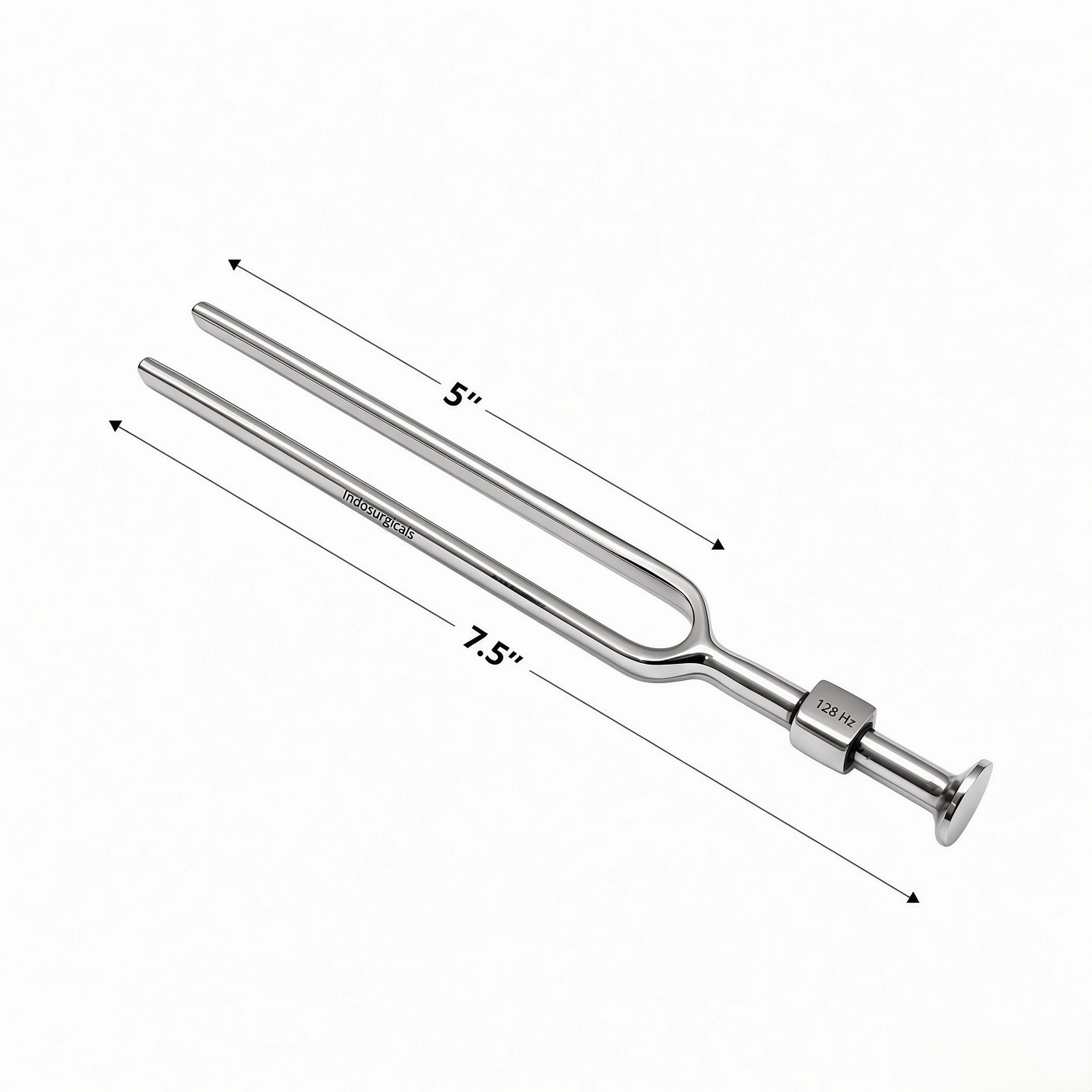
Tuning Fork 128 Hz
Medical sensory tuning fork particularly suited to assessment of vibration perception during neurological and peripheral sensory examination.
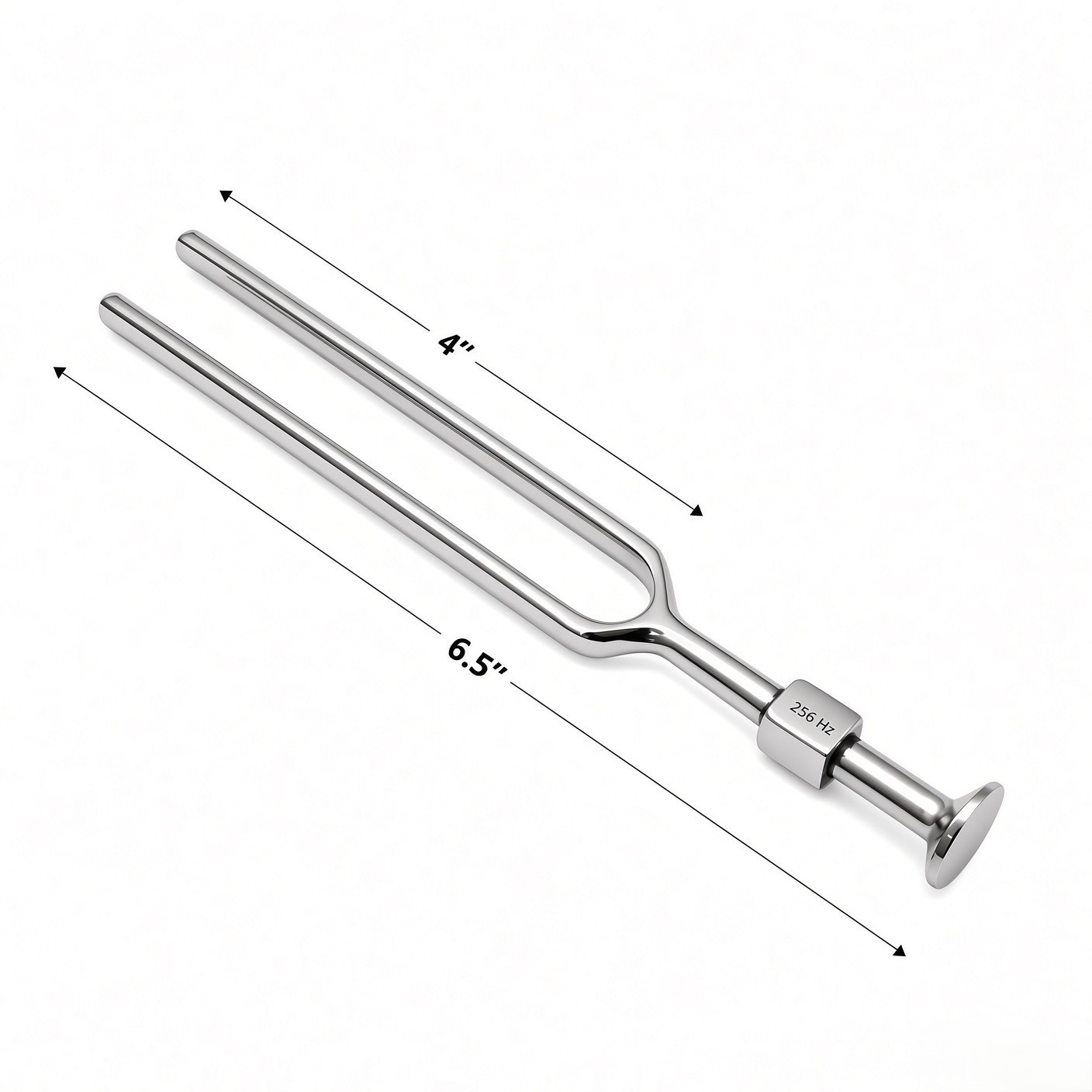
Tuning Fork 256 Hz
Steel medical tuning fork intended for selected hearing, bone-conduction and vibration-sensation examination techniques.
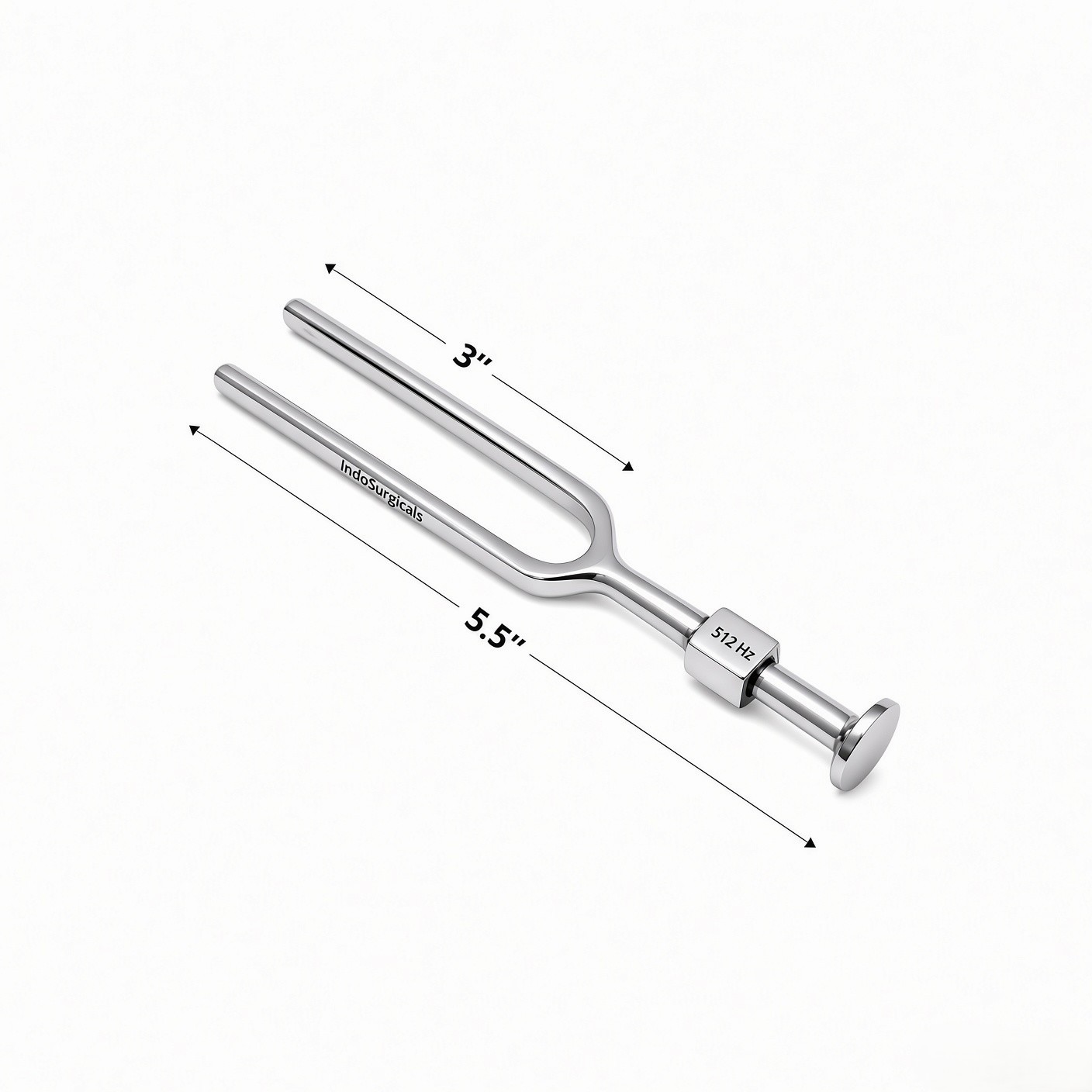
Tuning Fork 512 Hz
Medical tuning fork particularly suited to bedside hearing assessment, including Rinne and Weber examination techniques.
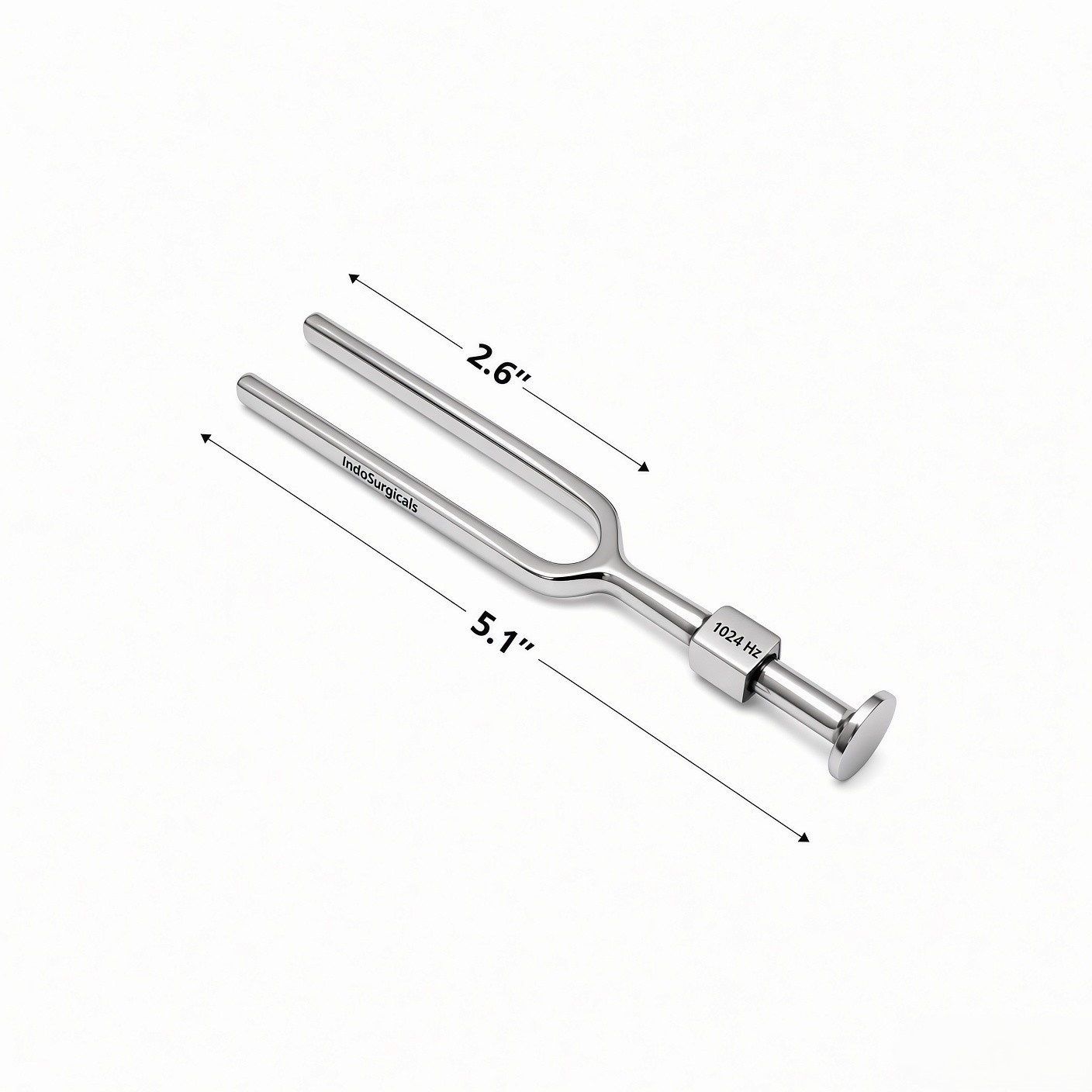
Tuning Fork 1024 Hz
Higher-frequency medical tuning fork for selected auditory, sensory and frequency-comparison examination requirements.
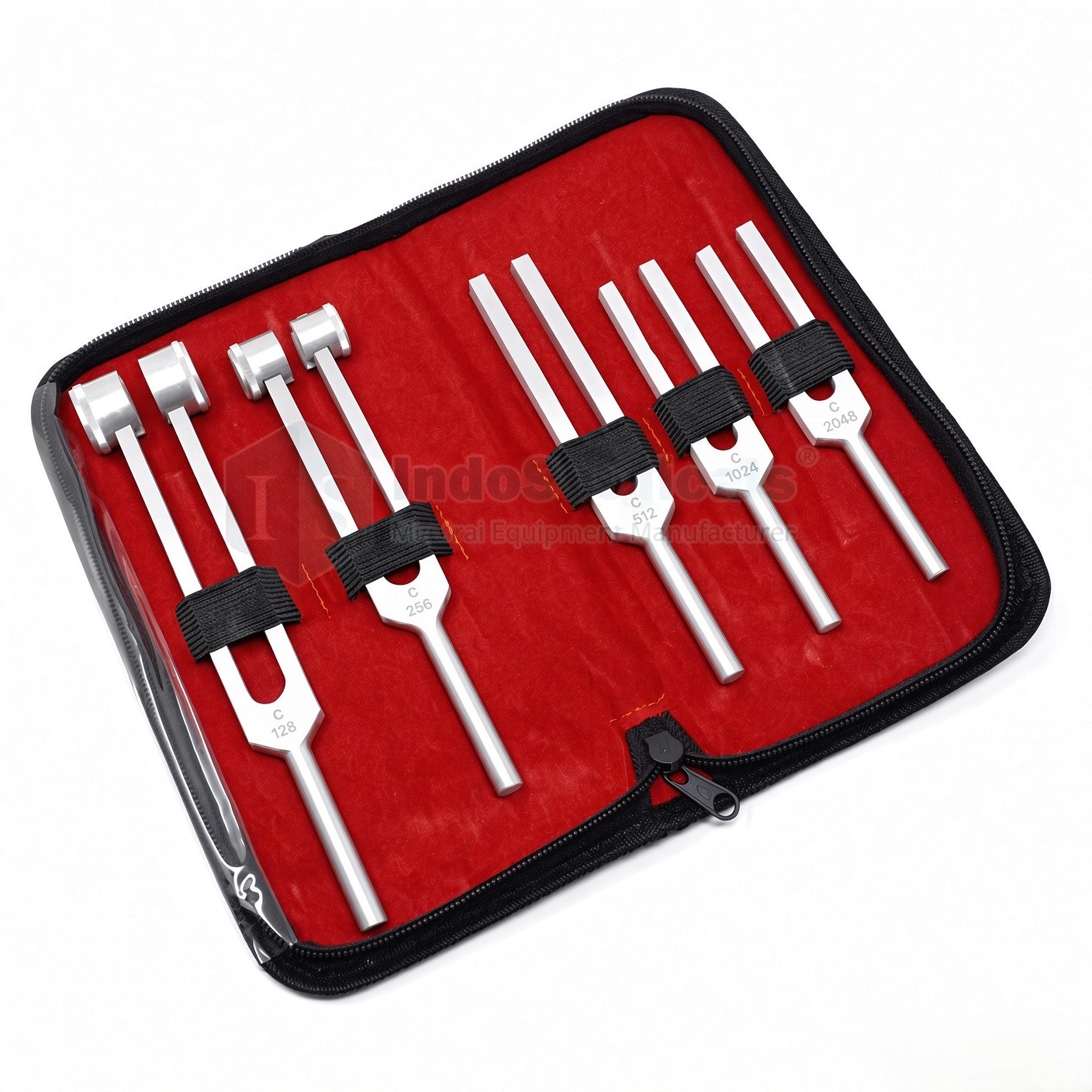
Aluminium Tuning Fork Set of 5
Lightweight five-frequency medical tuning fork set covering 128 Hz through 2048 Hz and supplied in a protective zipper bag.
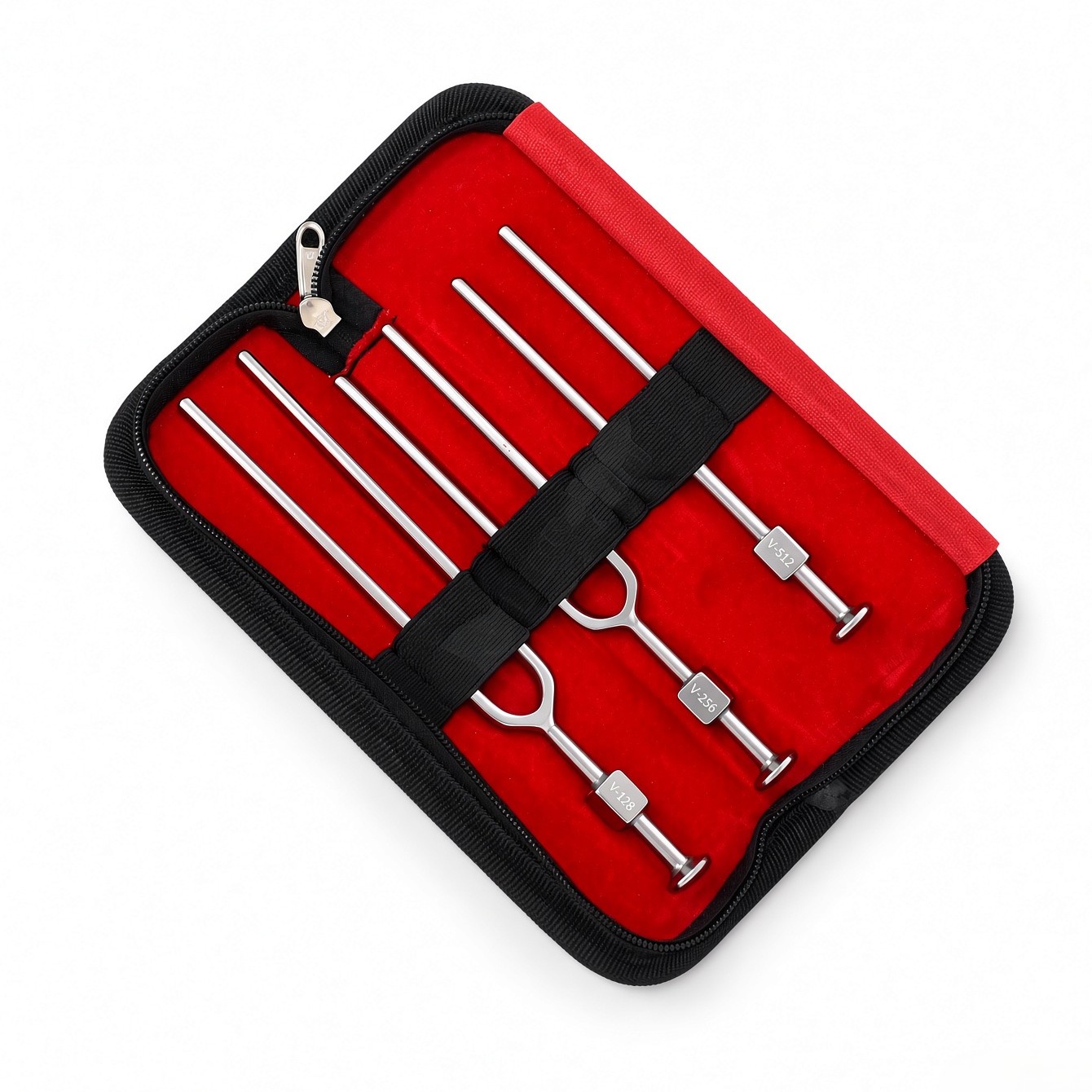
Tuning Fork Set of 3
Three-frequency medical tuning fork set containing 128 Hz, 256 Hz and 512 Hz for clinical examination, teaching and frequency comparison.
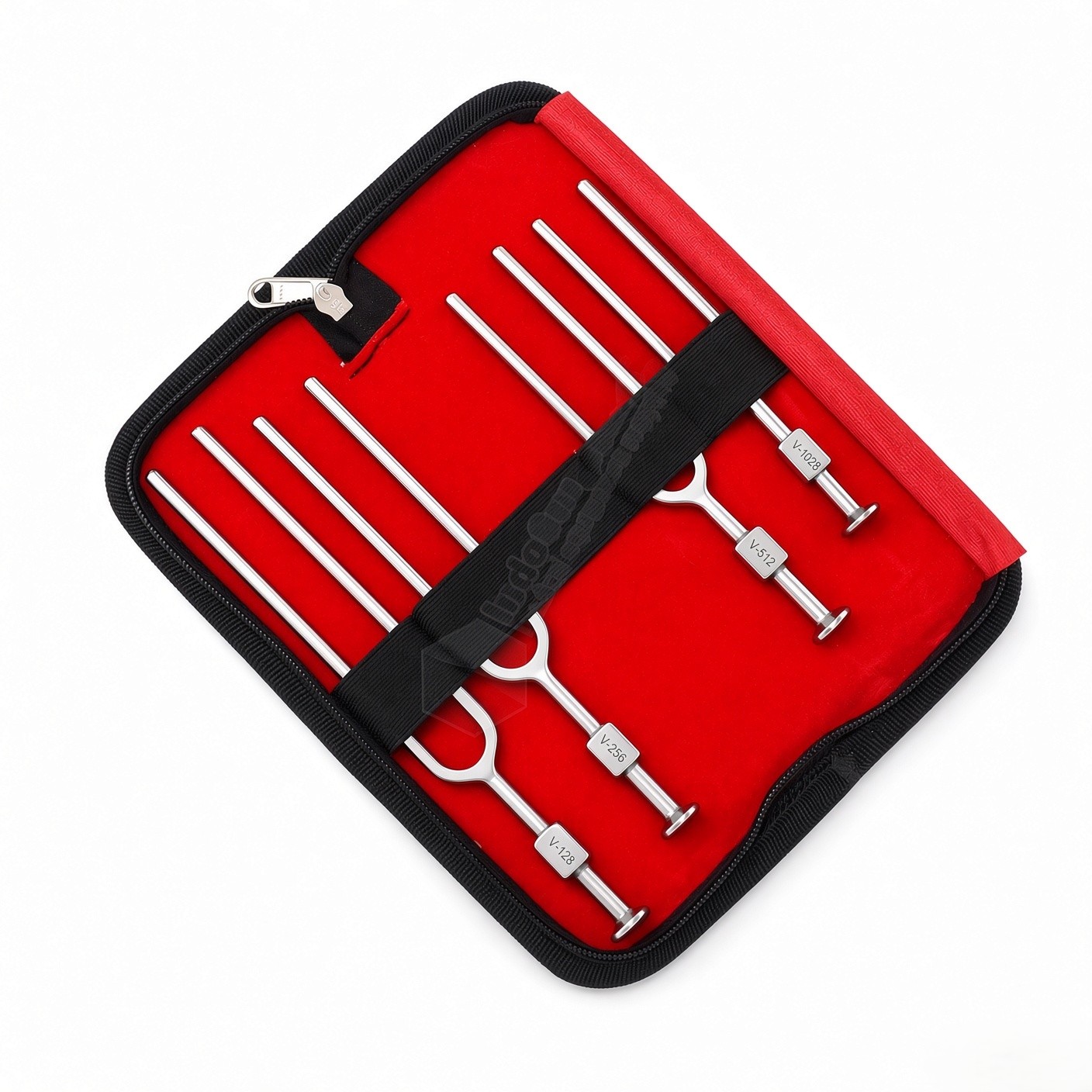
Tuning Fork Set of 4
Stainless-steel medical tuning fork set containing 128 Hz, 256 Hz, 512 Hz and 1024 Hz frequencies in a convenient zipper bag.
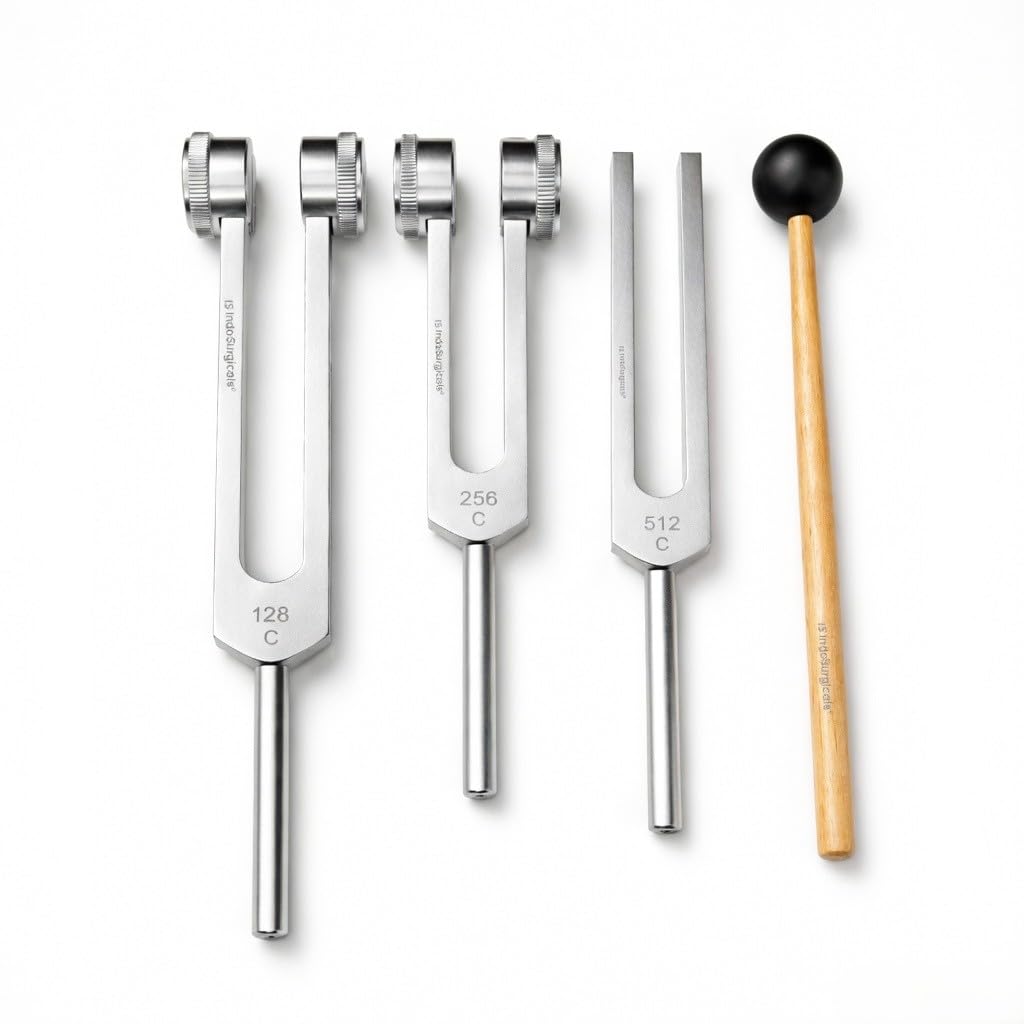
Healing Tuning Forks Set with Mallet
Aluminium sound and wellness set with weighted 128 Hz and 256 Hz forks, a non-weighted 512 Hz fork, wooden mallet and storage pouches.
How to Choose the Right Tuning Fork
The best starting question is not “Which tuning fork frequency is best?” but rather: “What do I need the tuning fork for?”
For neurological vibration-sense examination
A dedicated 128 Hz medical tuning fork is a particularly common choice when assessment of vibration perception is required.
For Rinne and Weber hearing tests
A dedicated 512 Hz medical tuning fork is commonly preferred for routine bedside hearing assessment.
For medical students
A set of three, four or five frequencies can be useful because it allows students to compare the acoustic and tactile characteristics of different tuning forks while learning examination techniques.
For meditation and personal sound practice
A purpose-designed wellness set combining weighted and non-weighted tuning forks offers a choice between stronger tactile vibration and a clearer audible tone.
Frequently Asked Questions About Tuning Forks
What is a 128 Hz tuning fork used for?
A medical 128 Hz tuning fork is commonly used for assessment of vibration perception during neurological examination. Weighted 128 Hz wellness forks may also be used during sound and meditation practices.
What is a 256 Hz tuning fork used for?
A 256 Hz tuning fork provides an intermediate balance between audible sound and tactile vibration. Medical versions may be used for selected hearing, bone-conduction and sensory examination methods.
What is a 512 Hz tuning fork used for?
A medical 512 Hz tuning fork is commonly associated with Rinne and Weber bedside hearing tests. A non-weighted wellness 512 Hz fork can also provide a clear audible tone for mindful listening.
What is the difference between weighted and non-weighted tuning forks?
Weighted tuning forks have masses attached to their tines and tend to emphasise mechanical vibration. Non-weighted tuning forks generally provide greater emphasis on the audible tone.
Which tuning fork is best for hearing tests?
The 512 Hz medical tuning fork is commonly selected for routine Rinne and Weber hearing examination because it offers a useful balance between tone duration and reduced tactile vibration.
Which tuning fork is used for vibration sense?
A 128 Hz medical tuning fork is widely used when examining vibration sensation as part of a neurological sensory examination.
Can tuning forks be used for meditation?
Yes. Some people use tuning-fork tones as a point of attention during meditation, relaxation or mindful listening. This wellness use should be distinguished from medical diagnosis or treatment.
Does a healing tuning fork cure disease?
The term “healing tuning fork” is commonly used for a wellness product category. It should not be interpreted as proof that a particular tuning fork can diagnose, prevent, treat or cure disease.
Should a medical student buy one tuning fork or a set?
A single fork may be sufficient when one examination frequency is required. A multi-frequency set can be more useful for medical teaching because several frequencies can be compared and used according to the examination being learned.
Final Thoughts
Tuning forks are a good example of how a very simple mechanical instrument can serve several different purposes.
A 128 Hz fork produces a very different combination of sound and vibration from a 512 Hz fork. Adding weights to the tines changes the experience again. And once intended use is considered, the difference between a medical diagnostic tuning fork and a wellness tuning fork becomes much clearer.
For clinical practice, frequency should be selected according to the examination method and appropriate professional training.
For meditation and sound practice, the different frequencies can simply be explored for their contrasting pitch, resonance and vibration without attaching unsupported medical promises to them.
In either case, a sensible choice begins with three questions: What frequency do I need? How is the fork constructed? What is it intended to be used for?
Explore IndoSurgicals Tuning Forks
IndoSurgicals offers individual medical tuning forks, diagnostic multi-frequency sets and a separate weighted/non-weighted tuning fork set for sound and wellness practice.
View Complete Tuning Fork Range Browse Diagnostic EquipmentHow did this opinion land?
Kumar Akhil Yadav
Director at IndoSurgicals Private Limited


Comments
Sign in to share your opinion on this article.
Be the first reader to contribute to this discussion.